



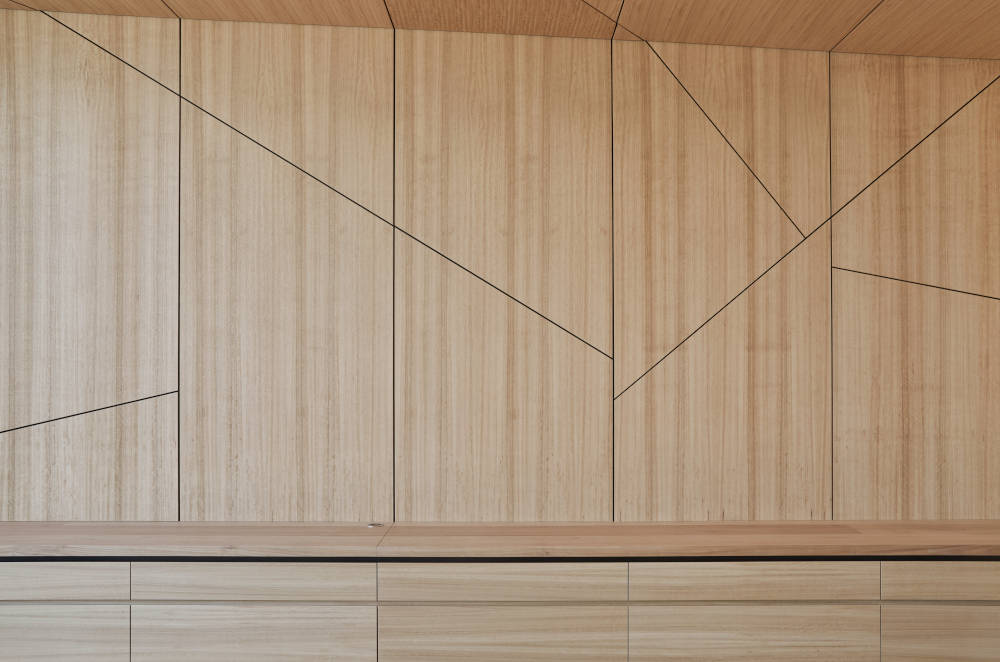
Concealed panel fixing systems: a comparison for interior design
For a specifier, the way a panel is fixed stops being a site detail and becomes a design decision. It determines the final look of the cladding, shapes the maintenance of the building for decades and defines whether a technical installation will remain accessible or buried.
In this article we compare, with technical judgement, the main concealed panel fixing systems on the market and explain why male-female concealed fixing has become the benchmark in demanding interior design projects.
01What a concealed panel fixing system is
A concealed fixing system joins the panel to its frame without visible screws. In Fastmount's male-female technology, of nautical origin, a female clip is fixed to the frame and a male clip to the back of the panel. The two snap together, aligning the panel precisely and allowing it to be removed without damaging the finish.

How to fix panels without visible screws
Load capacity is not attributed to the panel but to the set of clips: in the Standard range, each clip holds up to 15 kg, and capacity scales with the number of clips (2 clips = 30 kg, 4 clips = 60 kg). The calculation depends on the weight, format and material, and must be validated with technical advice.
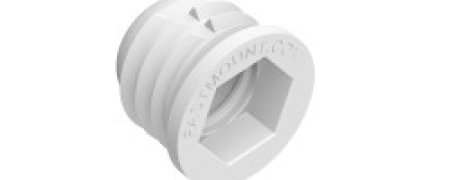 StandardGeneral use
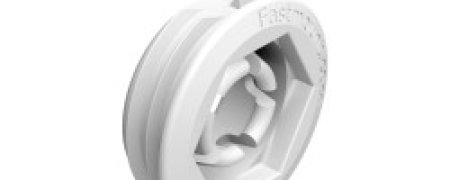 Low ProfileThin panels
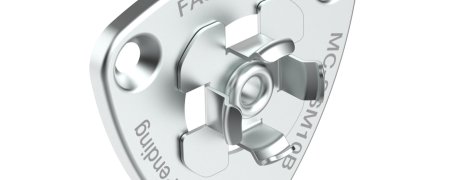 MetalLoad and fire
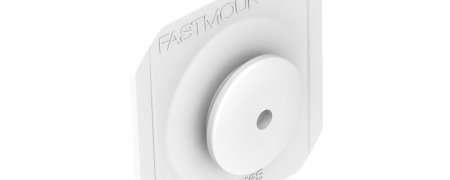 TextileCushions (~32 kg)
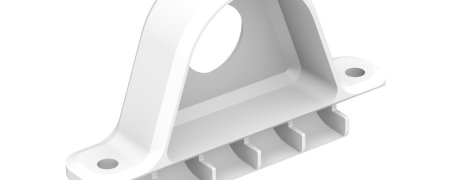 StratLockLarge format / stone
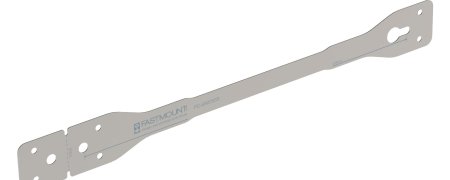 Panel ControlSeismic retention
02Alternative systems and their weak points
No specifier decides well without knowing the real limitations of each option. This is an honest comparison.
- Direct adhesive. Fast, but single-use: it leaves marks, is not accessible and creates no air gap. Any fault behind it means destroying the cladding.
- Visible T-24 grid. Its grid stays visible, with a look that does not fit premium interior design.
- Z-clip / French cleat. Its drawback is sequential removal: to take out a central panel you have to remove the adjoining ones.
- Industrial Velcro. Convenient but with a low load; on plasterboard it tears the paper off when removed.
- Batten + staple / nailing. Traditional solution, not reusable; mechanical fixing damages the piece.
- Male-female concealed fixing (Fastmount). Accessible in any order, no marks, reusable, multi-substrate, with alignment adjustment and an air gap.
03Comparison table of fixing systems
| System | Accessible | Reusable | Aesthetics | Access to services |
|---|---|---|---|---|
| Direct adhesive | No | No (single-use) | Leaves marks when removed | None (destructive) |
| T-24 grid | Yes | Partial | Visible grid | Good (ceiling only) |
| Z-clip / cleat | Sequential | Yes | Play, no adjustment | Limited (by order) |
| Industrial Velcro | Yes, with damage | No (one attempt) | Acceptable | Low (low load) |
| Batten + staple | No | No | Good if concealed | Laborious |
| Concealed Fastmount | Yes, any order | Yes (hundreds of cycles) | Flush, no screws | Total and non-destructive |

04Verdict by use case
Premium accessible ceiling. When the ceiling has to open to service light fittings or air conditioning without a single screw showing, concealed fixing is the clear choice: lower and refit any panel without a sequence.
Acoustic wall. The air gap created by concealed fixing favours a technical wall lining and makes access easier, unlike adhesive (which seals) and Velcro (which tears the plaster).
Heavy stone-type or large-format panel. The StratLock range is designed for this; clip sizing is calculated according to the real weight.
Fabric acoustics. Fabric-covered panels are fitted with any of the board-panel ranges (not the Textile range, which is for loose cushions): the fabric stays taut and the panel removable, without adhesive marks.
Specify with technical judgement
Each project has its optimal combination of range and number of clips depending on the weight, format and material of the panel. We help you size the exact solution for your specification.
Calculate my solution See the architecture pillarThe application images belong to Fastmount™. No acoustic values are claimed: all performance is referred to testing and the technical data sheet.