



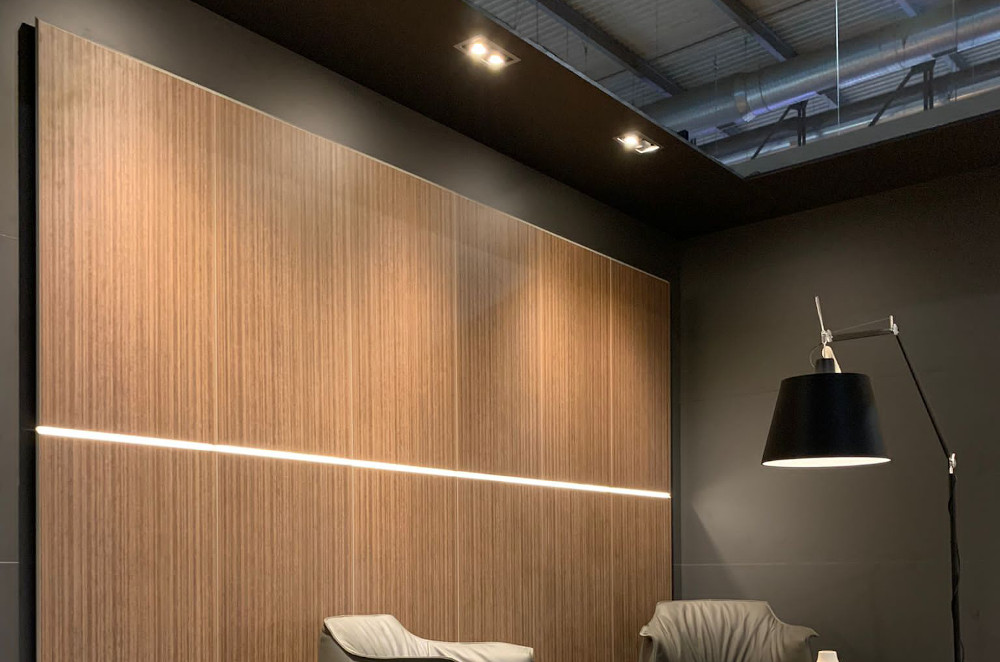
Accessible panelling: what it is and when to specify it in contract
In a contract project, the decision on how to fix a panel is rarely made with the day after handover in mind. Yet that is where —at the first air-conditioning fault above the suspended ceiling, the first refurbishment, the first ESG report— the real cost of a cladding is paid or saved.
The accessible panelling is the technical answer to that problem: a cladding designed to be removed and refitted without destroying the finish. This guide is aimed at specifiers who need to decide when panelling should be accessible and how to achieve it without giving up aesthetics.
01What accessible panelling is (and how it differs from fixed panelling)
Accessible panelling is a wall or ceiling cladding that can be partly or fully removed to reach what lies behind it —services, technical plenum, structure— and then put back, keeping its alignment and finish. The key: reversible connections, not adhesives or permanent nailing.
Fixed panelling —glued, stapled or nailed— is essentially single-use. Getting behind it means cutting, ripping out or breaking the panel. Fastmount concealed fixing achieves reversibility through a system that is male-female: the panel is held firmly but released when needed, without visible screws or hatches.
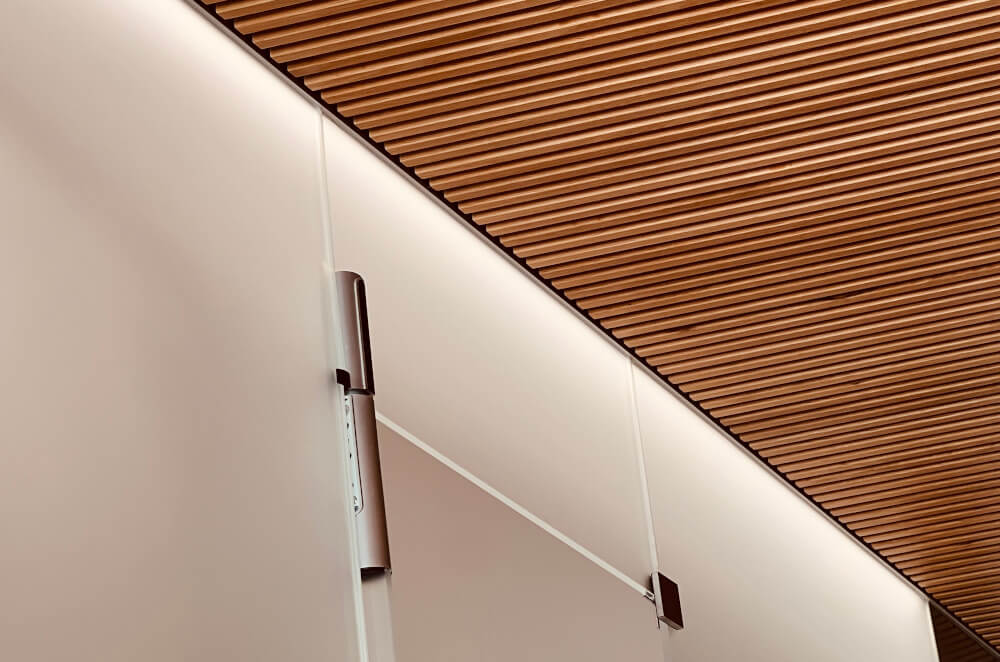
02When to specify it (checklist for specifiers)
Specify accessible panelling when the project meets one or more of these points:
- There are services behind the panel: air conditioning, plumbing, cable trays, wiring, fire protection, valve access points.
- Changes or regular maintenance are expected: flexible offices, hospitality, retail, healthcare.
- The hidden element has a shorter service life than the cladding: burying the short-lived behind the long-lasting with adhesive guarantees future demolition.
- There are traceability or inspection requirements.
- The project pursues circular economy goals or ESG certification.
- The design does not allow visible screws or hatches.
03Accessible and attractive: concealed fixing without hatches
The big misunderstanding is assuming that "accessible" means "visible". Concealed fixing breaks that compromise: because the fixing sits on the back of the panel, the visible surface stays completely clean. The whole panel is the access point.
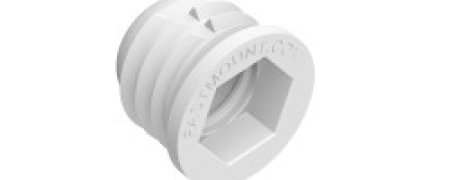 Standard15 kg/clip, scalable
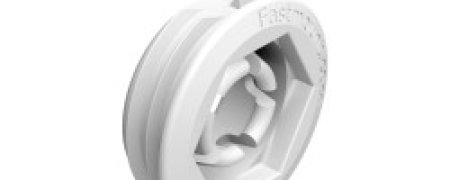 Low ProfileMinimal cavity
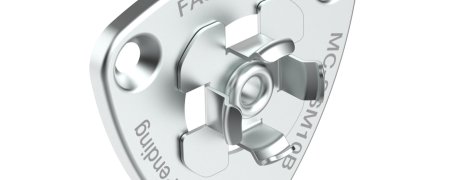 MetalReaction to fire
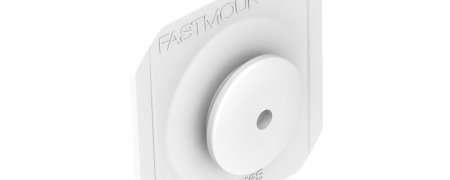 TextileCushions
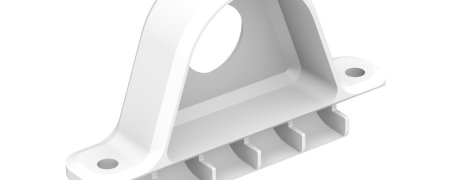 StratLockLarge formats
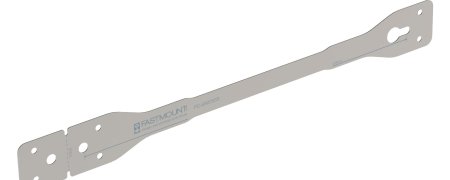 Panel ControlSeismic, no tools
04Circular economy and Design for Disassembly
The weighty argument in the medium term is not maintenance, but the circular economy. The sector is moving towards the principle of Design for Disassembly: designing buildings so that their components can be separated, recovered and reused.
A glued panel is single-use material: its circular value is zero. A panel with reversible connections keeps its value and can be relocated to another project.
This connects with two growing demands: environmental product documentation —EPD and the schemes of AENOR— and the ESG criteria and sustainable building certifications, which reward reversibility and waste reduction.
05How to write it into the specification
- Identify on the drawings the areas with concealed services or foreseeable maintenance.
- Select the range according to weight, format, substrate and fire or seismic requirements.
- Size by number of clips according to the real weight of each panel.
- Document reversibility as a sustainability criterion in the project report.
Defining accessible panelling?
Accessible panelling does not make a project more expensive: it shifts its cost from future demolitions to a specification decision made in time. We advise you on the range and the sizing.
Calculate my solution Architecture pillarThe application images belong to Fastmount™. No acoustic values are claimed: all performance is referred to testing and the technical data sheet.