



The aesthetic problem screws cause in luxury interior design
There is one detail that separates a truly luxurious interior from one that merely tries. It is not the type of marble, nor the brand of the taps, nor the price per square metre of the floor. It is something far subtler and, paradoxically, far more powerful: the total absence of visible screws, nails and fixings on the decorative surfaces.
Interior designers working for Europe's most exclusive hotel chains, Michelin-starred restaurants and high-end private residences have known this for years. A visible screw —however well placed, however polished its head, however discreet its finish— is a discordant note in a visual symphony that demands absolute perfection.
01The imperfection the eye detects without knowing why
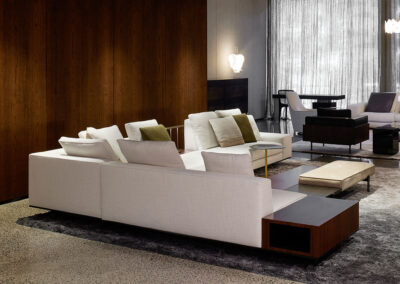
The human brain is programmed to detect patterns and, above all, interruptions in those patterns. When a guest walks into a five-star hotel suite, their gaze sweeps the surfaces unconsciously. If the timber panels flow continuously, without marks or interruptions, the brain registers harmony. If there is a screw head every forty centimetres, the brain registers something different: construction. Assembly. Artificiality.
You do not need to be an interior designer to perceive this difference. It is enough to have been in a truly well-designed space and compare it with one where the fixings are on show. The feeling is vague but real: something is not quite right, something breaks the flow of the space, even if the guest cannot pinpoint exactly what.
“When I design a luxury space, the aim is for the client to feel that the walls simply exist. That they were not built, that they were not assembled, that they were always there. Any visible screw destroys that illusion.”
Marta Delgado Ríos — Creative director, Studio MdR, Madrid
02The solutions that do not work
For decades, the industry has tried to disguise screws instead of eliminating them. Turned timber plugs, filler matched to the panel colour, touch-up paint applied with a surgeon's steady hand. All these techniques share a fundamental flaw: they are disguises. And disguises, by definition, are not invisible. They are visible and dressed up.
A timber plug never exactly matches the grain of the panel around it. Filler changes colour over time. Touch-up paint shows under raking light. An experienced interior designer spots these imperfections from two metres away. An architectural photographer curses them at every shoot. And the luxury client, even if unable to put it into words, perceives them as a lack of quality.
03The problem gets worse with contemporary materials
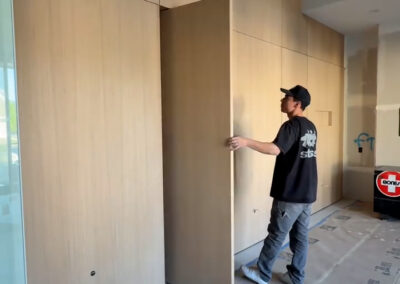
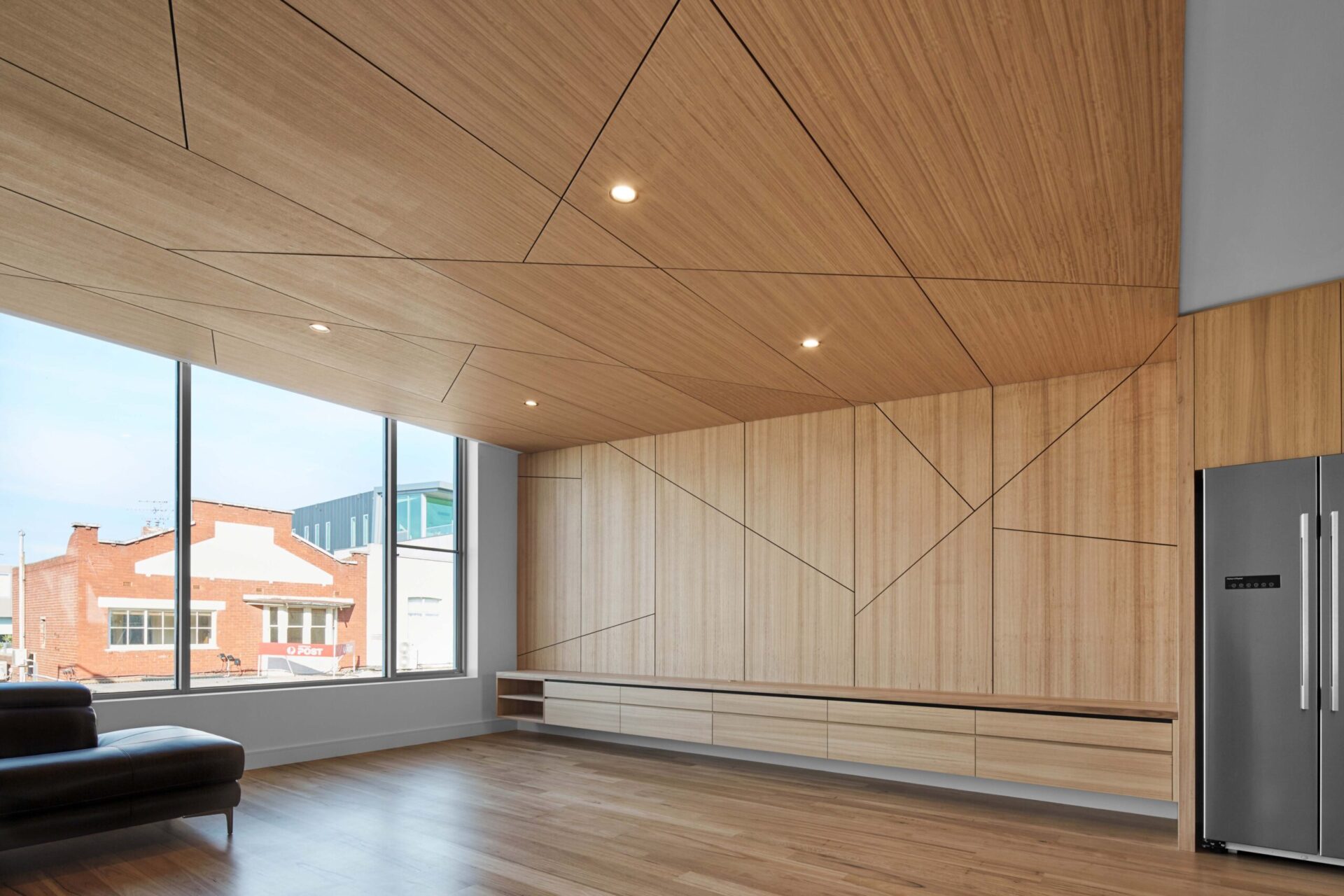
The current trend in high-end interior design favours large-format panels, lacquered surfaces, polished metallic finishes and timber with continuous grain from end to end. These materials demand a visual perfection that traditional fixing systems simply cannot offer.
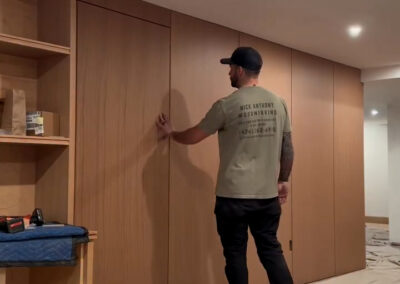
A high-gloss lacquered panel 2.40 metres high and 1.20 wide is, in essence, a coloured mirror. Any screw head, however small, becomes a visual crater. A straight-grained oak panel, selected sheet by sheet to guarantee the continuity of the fibres, loses all its elegance when six screw holes pierce its surface.
04What the luxury client really expects
The guest at a five-star hotel or the owner of a design residence does not buy materials: they buy sensations. They buy the feeling that the space was created for them, that every surface exists with a naturalness that seems organic. They buy the absence of visible effort, the removal of any evidence of the building process.
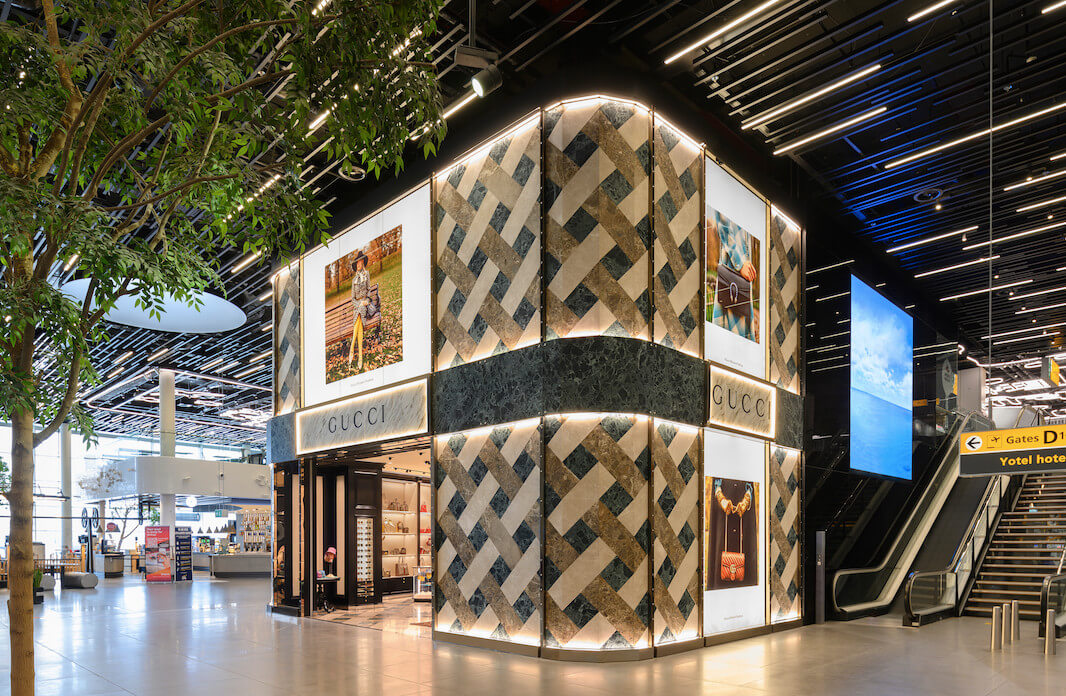
Exactly the same happens in luxury retail. When a house such as Gucci, Hermès or Loewe designs a boutique, every millimetre of wall is designed to project exclusivity. A Phillips screw peeping out between two leather panels sends the opposite message: this was put together by a fitter, this is a piece of furniture, not a work of art.
05The solution: take the screw out of the equation
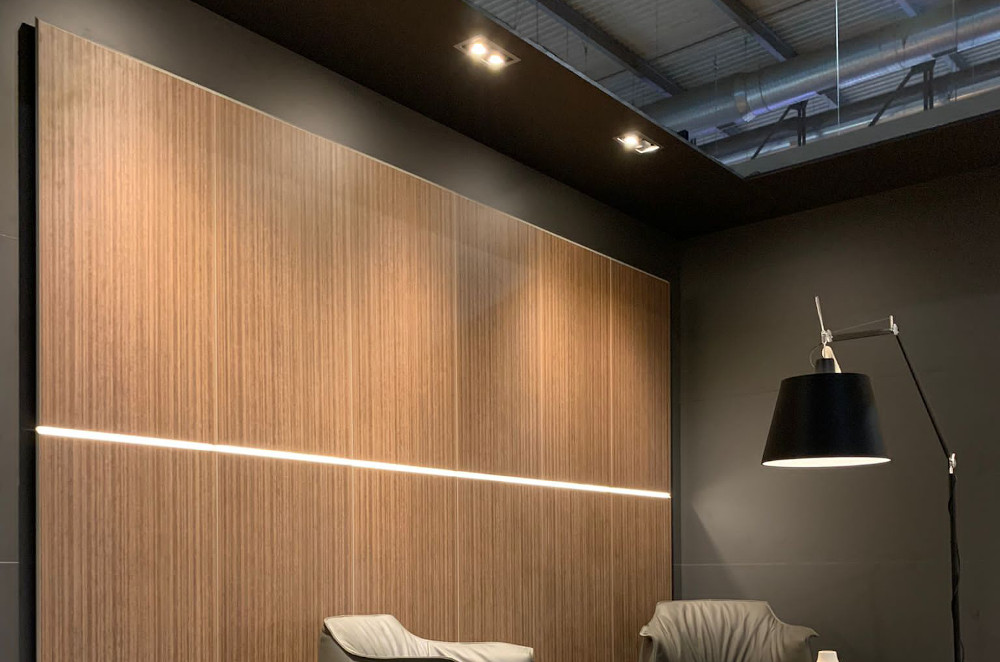
The solution to this problem is not to invent smaller screws or more sophisticated fillers. The solution is to remove the screw from the decorative equation altogether. That is exactly what is done by invisible clip systems such as Fastmount: robust mechanical fixing that stays completely hidden between the structure and the panel, with nothing on show on the decorative surface.
The fixing is as solid as it is discreet. In the Standard range, each clip holds up to 15 kg and capacity scales with the number of clips: two clips support up to 30 kg and four up to 60 kg. The exact sizing depends on the weight, format and material of the panel, and should be validated with technical advice. What matters for interior design is that all that strength lives behind the panel: the visible surface stays clean and, in addition, accessible piece by piece.
Discover Fastmount invisible clips
If you have a project that demands visual perfection, we help you size the exact range and number of clips according to the weight, format and material of the panel. Permanent stock in Spain and Portugal, with deliveries in 24-72 hours.
Calculate my solution See the architecture pillarThe application images belong to Fastmount™. No acoustic values are claimed: all performance is referred to testing and the technical data sheet.